
Markers / Review
POSCA markers: start with the right tip
TLDR
The POSCA PC-5M is my best first paint pen. Its medium bullet tip suits everyday drawing; choose PC-3M for fine work or PC-8K for broad fills.
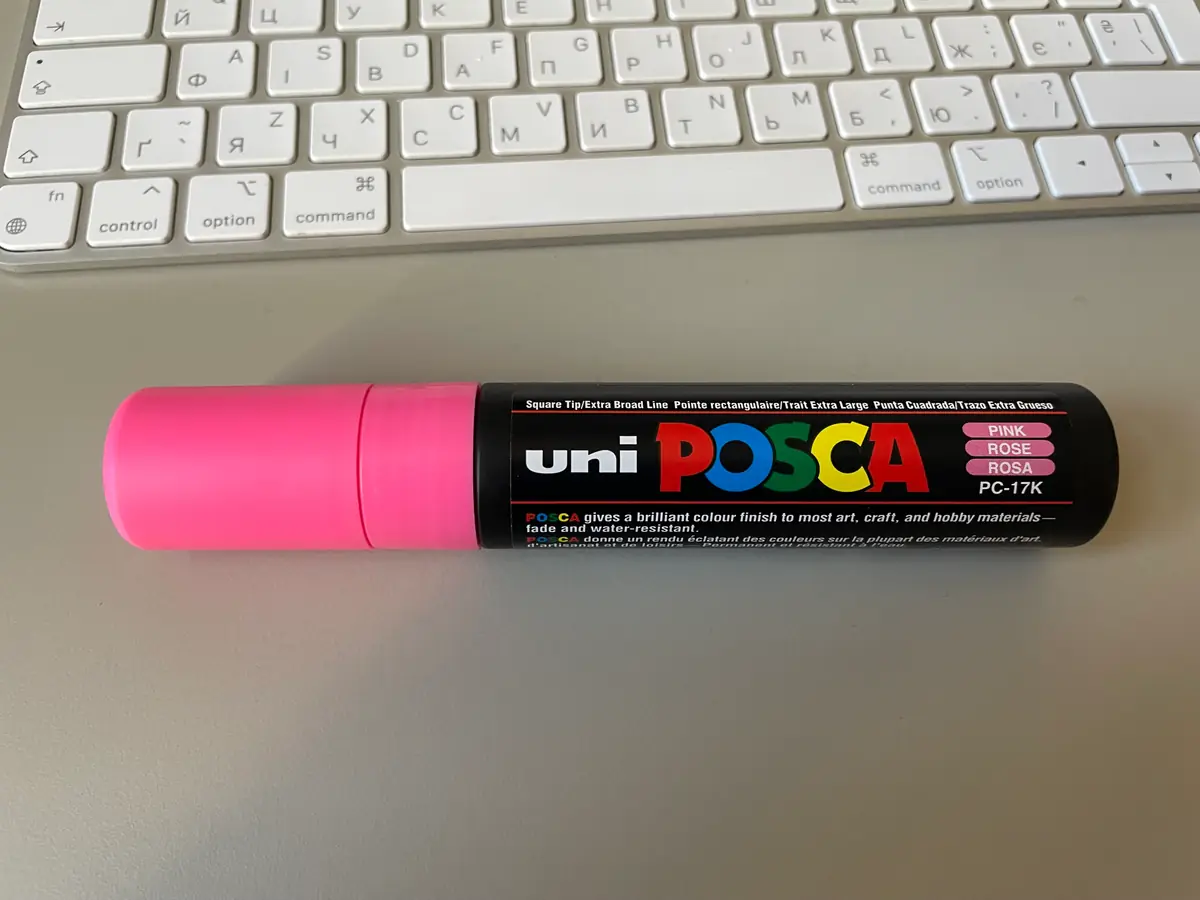

The bright cap catches your eye. The tip size should make the sale. A small tip can feel slow on a big shape. A broad one can swallow the fine line you meant to draw.
I would start with a few POSCA paint markers in one useful size. Learn how they flow on your paper before buying a full set. These pens suit bold shapes, small painted details and clean blocks of color. They ask for a lighter hand than the name "marker" might suggest.
Start with a medium bullet tip size
The POSCA PC-5M is my first pick for most people. Its bullet tip makes a line about 1.8 to 2.5 mm wide. That is broad enough for a small patch of color, yet easy to place on a card or simple drawing.
I like this middle ground. You can find out whether you enjoy painting with pens without being stuck with a needle-fine point or a huge chisel. It will not replace each tip size. It does give you a useful place to start.
| POSCA pen | Where I would use it |
|---|---|
| PC-5M, medium bullet tip | Everyday drawing and small areas of flat color |
| PC-3M, fine bullet tip | Small letters, borders and fine details |
| PC-8K, broad chisel tip | Large letters and wider fills |
PC-3M: choose this for fine work
The PC-3M has a fine bullet tip with a line of about 0.9 to 1.3 mm. I would use it for small type, edge details and marks that need more space around them.
Its weak point is a large fill. You need more passes, which can leave tracks or wear soft paper. If most of your painting is broad shapes, start with the PC-5M and buy one fine pen for accents.
PC-8K: choose this for broad marks
The PC-8K has an 8 mm chisel tip. Its wide face helps cover a larger shape. The edge gives a narrower mark, though it still takes room to turn.
I would choose this tip size for bold signs and broad letters. I would skip it for a tiny sketchbook. Small pages can make a broad chisel feel like a broom in a cupboard.
POSCA paint markers are different from ink pens
POSCA uses water-based acrylic paint. These water-based markers dry to a flat, matte finish. A thin coat can dry in a few minutes, though the surface and paint load affect the wait. It sits on the surface and can hide a color below once the lower coat has dried. An alcohol ink marker usually gives a more see-through result and soaks into suitable paper.
That difference shapes the whole drawing. Use POSCA for flat color, dots and bright highlights over dark areas. Its opaque paint covers a dark base better than see-through dye ink. Use Ohuhu alcohol markers when you want to build soft blends on white paper. One type does not replace the other.
A white paint pen is a useful first buy. It can add a small shine to a dark shape or help test coverage on tinted paper. Do not expect one fast stroke to hide every dark mark. Let a thin coat dry, then see whether it needs another.
A brush tip gives a different feel from a bullet tip. A flexible brush tip can change width as you change pressure. A firm bullet is easier to hold at one width. I would learn with firm tips first unless brush lettering is the main goal. Brush tips suit loose lettering; bullet tips suit a steady line. The best tips depend on the marks you want to make.
Mix colors while the paint is wet
You can blend wet POSCA paint with another wet color. A damp brush can spread or thin it for a softer, wash-like effect. That opens up more uses than solid dots and lines, but it also adds water to the paper.
Try it on a spare piece first. I would keep a brush for painting a soft edge, then return to the pen for a sharp one. Once the paint has dried, fresh colors can sit above it with less mixing. Wet blending and dry layering ask for different timing.
Prime the tip away from your painting
Fresh pens need paint moved into the tip. Follow the POSCA user guide: shake the capped pen, then press the tip on scrap material until the paint reaches it. Try a few marks before moving to your work.
Keep that scrap close by. Pressing hard on the picture to restart a dry stroke can send out more paint than you meant. The page is a poor place to find out that the tip is now full.
Once the paint flows, let the tip glide with light pressure. These pens are not pencils. More force does not make a better mark. If the line goes patchy, pause and check the nib on the scrap again.
Paint flow is one of the features worth learning before a big project. Start with lines, dots and one small square. Then fill a second square after the first one dries. That simple test shows more than a page of frantic scribbles.
Paper can be the weak link
Thin drawing paper may pill when a wet tip rubs the same spot over and over. Little balls of fiber can then catch on the nib. Pushing through them often makes the surface worse.
In this discussion of paper wear, artists describe very different results on different sheets. The shared problem is rubbing a wet surface too much. A few people like smooth card; others prefer paper made for painting.
I would start with a firm, smooth mixed-media sheet. Try your full set of layers on an offcut. If the paper still breaks up, change the sheet or use fewer passes. There is no prize for forcing a pen and paper to get along.
Want neat card blanks? My paper cutter guide explains which tools suit one sheet and which can handle small stacks. Cut a few spare strips from the same paper for swatches.
Let one layer dry before the next
POSCA paint markers are useful for painting a pale shape over a darker one. But a wet first layer can mix with the fresh stroke. Let it dry if you want the new color to stay clean.
Work with thin coats. Do not scrub a patch that still feels damp. Return to it once the rest of the drawing is done. A light second coat can look far cleaner than one thick puddle.
Black and white are a strong pair for learning this. Make a dark square, let it dry, then draw a white line through it. Try the reverse beside it. You will see how the colors cover on that surface, with that tip and that amount of paint.
For a large matte background, I would use a brush and gouache paint. Save the pen for the details where its shape helps. Filling a whole page with a small bullet tip takes time and uses up paint.
Will the paint stay on wood, glass or plastic?
The surface matters as much as the pen. POSCA describes its paint as permanent on porous surfaces and removable on most smooth, nonporous ones. A mark that feels dry is not proof that it will survive rubbing or washing.
Check the brand's surface and care guidance before painting an item that will get handled. Prep and a suitable finish vary by material. Outdoor work may need a compatible protective coat. Test that coat on a spare piece too.
I would keep a first project simple: an indoor paper card or a small art board. A mug, shoe or outdoor sign brings more wear and more questions. Do not treat art paint as a food-contact coating or skin paint.
For indoor wall art, choose a surface you can keep dry. For an outdoor object, think about sun, rain and hands, not just how the first coat looks. A nice color is only one part of the job.
Build a small set of POSCA paint markers
My starting POSCA set would be white, black, a warm red, a yellow and a blue. Add one color you love. That six-color set gives you a clear way to learn without a drawer full of duplicates.
If you work on dark paper, give white a larger share of the budget. If you draw tiny plants or small letters, put that money into a fine tip. If broad type is the goal, a chisel will matter more than extra shades.
Check the model code when you shop. A pack with the right colors and wrong tip size can be a costly nuisance. Compare single-pen prices with set prices, and check whether a retailer lets you replace just one used-up color.
Keep caps firmly on between sessions. The PC-3M, PC-5M and PC-8K have replaceable tips. The PC-3M and PC-5M tips are reversible too. You can turn a worn nib around, then prime it again. Wash a dirty tip as the maker directs before deciding it has worn out.
POSCA paint markers are not refillable. A fresh tip can solve a nib problem, but it cannot replace used-up paint. That makes single-color stock and the price per pen worth checking. Buy a set for the colors you need, then replace your busiest shade on its own.
Where I would use POSCA markers
My ideal first project is a card with flat shapes and one short line of type. Write the letters with a fine bullet tip, then fill the shapes with a medium tip. A small, clear design lets you learn paint flow without using half a pen.
For mixed-media work, I would use POSCA paint markers for the last crisp details. They suit comic-style outlines and painted canvas accents. Let the base dry first. A wet stroke below can muddy the fresh color above it.
For rock painting, clean the stone and let it dry before drawing. Bold dots and stripes suit the PC-5M. For a sneaker design, check the fabric and finish first. Flexing and wear make a shoe a harder project than a paper card.
Glass and ceramic are different again. POSCA can mark them, but a smooth surface can let the paint rub off. I would keep painted mugs as display pieces unless the whole finish is approved for the intended use. Keep art paint away from food and lips.
Non-toxic paint still has limits
The US brand describes its water-based POSCA paint as odorless and ACMI-certified non-toxic. Those features suit indoor painting and shared art tables. They do not make the paint suitable for skin, food or every object a child may put in their mouth.
Read the label and the care advice for your materials. Clean wood, stone, glass, metal, plastic and canvas each give painting a different set of demands. I would use these markers for art and decorative work, then choose a finish suited to that surface and its use.
What I would check before buying a set
- Tip mix: a set of fine tips suits small details. A set of broad tips suits signs. Match the set to the scale of your painting.
- Color mix: a pastel set can be great for pale accents, but it may not give you the dark shades for a full drawing.
- Spare tips: check local stock for the model you choose. Fresh tips help when a nib wears out before the paint is gone.
- Storage: keep the set where each cap can stay tight. Loose caps can turn your next painting session into a nib-cleaning job.
No single set meets every artist's creative needs. I would spend first on one useful tip size and a few core colors, then let the next project guide the rest.
My verdict: a few good pens beat a giant set
POSCA paint markers earn their place when you want opaque color with the control of a pen. The PC-5M is my best first choice. The PC-3M earns its keep on fine details; the PC-8K suits much bolder marks.
The limits are real. Soft paper can pill. Paint can pool if you press too hard. Smooth surfaces may need more prep and care. If those tradeoffs fit your work, buy a small set and give the tips room to do their job.