
Markers / Review
Ohuhu markers: which set is worth it?
TLDR
Ohuhu Honolulu is my pick for loose lines and broad fills. Start with a small brush-and-chisel set; choose Honolulu B if fine detail matters more.
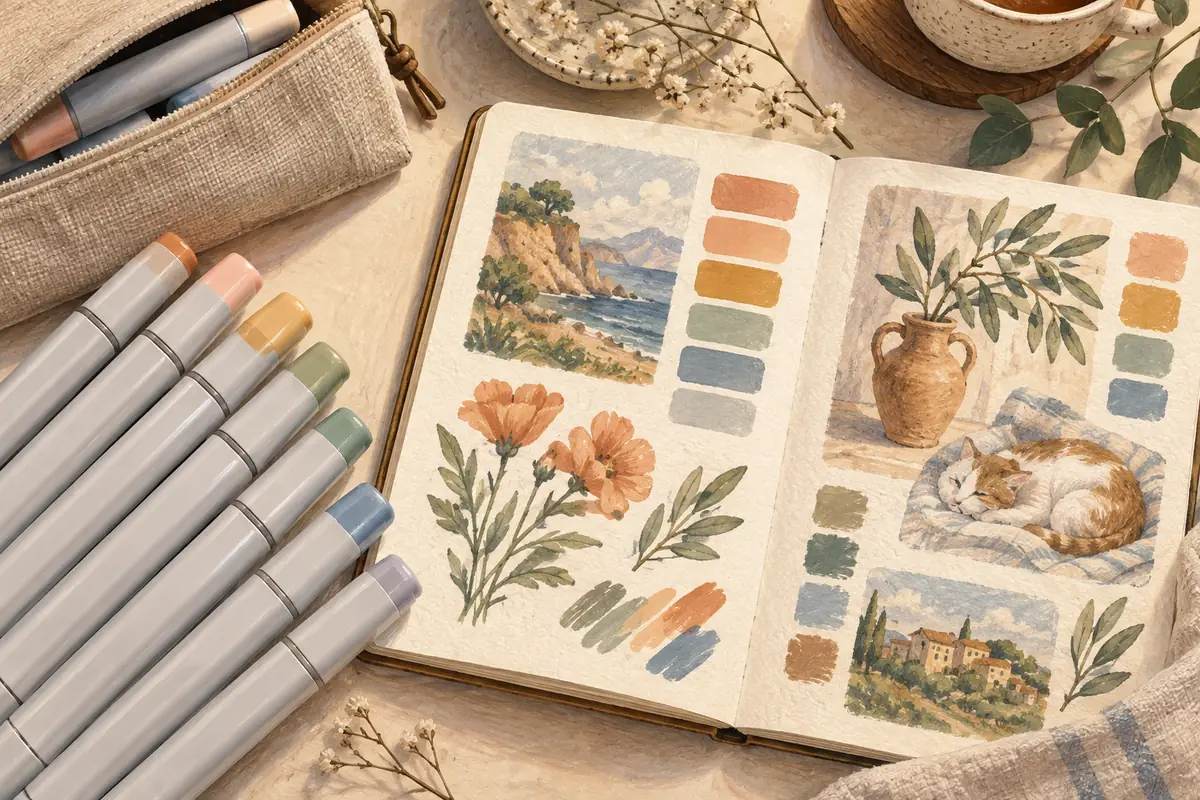
A wall of colors is tempting. But the part of an art marker that matters most is the bit you hold against the page. I would choose the tips first, then buy the smallest set with colors I like.
Ohuhu markers make sense for sketching, coloring and learning to blend. The broad range gives you room to grow. The catch is easy to miss: paper, spare ink and replacement pens are part of the cost.
Which Ohuhu art markers and dual tips would I choose?
My first choice is Ohuhu Honolulu with brush and chisel tips. The brush flexes for loose marks. Turn the wide chisel tip on its edge for a thin line, or use its broad face to fill a shape. Those dual tips suit more tasks than a fine point alone.
| Range | Best fit |
|---|---|
| Ohuhu Honolulu | Brush and chisel: loose lines and broad fills |
| Ohuhu Honolulu B | Brush and fine: small shapes and detail |
| Ohuhu Oahu | Fine and chisel: firm tips without a brush |
Ohuhu Honolulu B is the better fit if a coloring book has lots of tiny spaces. Its fine tip is easy to place. I would pick Ohuhu Oahu if I preferred firm tips for plans or block letters. Neither choice makes the other art markers worse. They solve different problems. Firm fine and chisel tips suit sharp lines in plans or comic panels. Brush tips suit strokes that change width.
A brush tip matters more than a huge set
For beginners, I would start with a small general set. Look for a light, midtone and dark color in the hues you use most. Three useful blues can do more than ten near-matches you never reach for.
The 320-color Ohuhu Honolulu set suits artists who already know they want a wide range. It includes 1 colorless blender, swatch cards, a protective sheet and a carrying case. The zippered case helps keep a large palette together. A wide color library can suit both beginners and working illustrators, but it takes time to learn which shades earn their space. Check the product image and option name: the same color count can come with different dual tips.
Check the exact tip pair before you pay. Similar bags can hold different dual tips. Compare the unit price per colored marker, but also ask how many colors you will use. A low price per pen is poor value if half the set stays capped.
The classic Honolulu range has rounded barrels. I would check the grip before a long drawing session if possible. A shape sold as ergonomic can still feel wrong in your hand. The newer Honolulu generation has a different body, so match the photos to the exact set.
What does 1 colorless blender do?
A blender moves dye and softens an edge. It does not erase a dark mark back to white. Test it on scrap paper first. Too much liquid can spread the color beyond the line you meant to keep.
Paper changes how well the ink flows
Alcohol ink can bleed through paper. Put a barrier sheet behind the page and try a small patch first. In a book printed on both sides, even a tidy front can leave a ruined back.
Smooth marker paper is a sensible place to start. Very thirsty paper can use more ink and leave uneven coloring. Alcohol ink dries fast, so work on small sections while the ink is still wet. Overlap each pass before it dries. A broad chisel helps cover large areas; a brush helps blend a small shaded shape. Smooth results take practice, close colors and suitable paper. Bold colors are part of the appeal, but even good art markers can leave streaks if the paper dries between passes.
For flat, opaque marks over dark paper, see my guide to POSCA paint markers. For large painted backgrounds, a small gouache palette may suit the job better.
The cost I would watch: ink you use up
In one detailed owner account, favorite colors ran dry within a few months. The same owner praised the help from customer support. That is one person's experience, not a failure rate for the whole range.
Still, the point matters. Large blocks of color use ink. Before buying, check whether your most-used shades have matching refills or single pens in stock. Keep the caps snug and the markers away from heat. Ohuhu offers refills for many alcohol marker shades. Check the exact match before you need it. A big bag does not make each pen last longer.
Use color coded caps and new color codes
Ohuhu has changed its color labels. Use the color conversion guide when matching an older set to new color codes. Compare the code on the actual listing before ordering a refill.
Color coded caps help sort a set, but they are not a perfect view of the ink. Make a swatch card on your own paper. Mark it with the new color codes where needed. A swatch helps you find colors fast and judge the results once dry. Keep the color coded caps beside the pens as you draw, then put each cap back on its match.
Price, sets and the cost of overlap
Compare the regular price with the sale total for the same set, tip pair and region. A bundle is not a saving if you already own most of its colors. For beginners, I would choose a useful range over the lowest cost per pen.
For a concrete price point, the official 48-color Honolulu B bundle lists at $49.99 on September 24, 2026. It pairs brush and fine tips with a coloring book. Check the current total and shipping at checkout. I would compare that with a plain set before paying for a book I may not use.
The dual tips are why I would choose Ohuhu markers: one end for an edge, one for a fill. They will not make you draw like a pro on day one. Good paper and time to learn will do more than a second bag of art markers.
Are Ohuhu markers worth it?
Yes, for artists who want lots of color and useful dual tips for paper work. My pick is Ohuhu Honolulu for the flexible brush and broad chisel. Choose Honolulu B for more fine detail.
I would pass on a huge set as a first purchase. Buy a modest range, good paper and room to replace a favorite shade. That is a more useful start than a bag full of colors you feel obliged to use.