
Paint / Buying guide
5 gouache paints for a fresh start
TLDR
Winsor & Newton Designers Gouache is my first pick for a small mixing palette. Choose Holbein Acrylic Gouache when dry layers need to stay put.
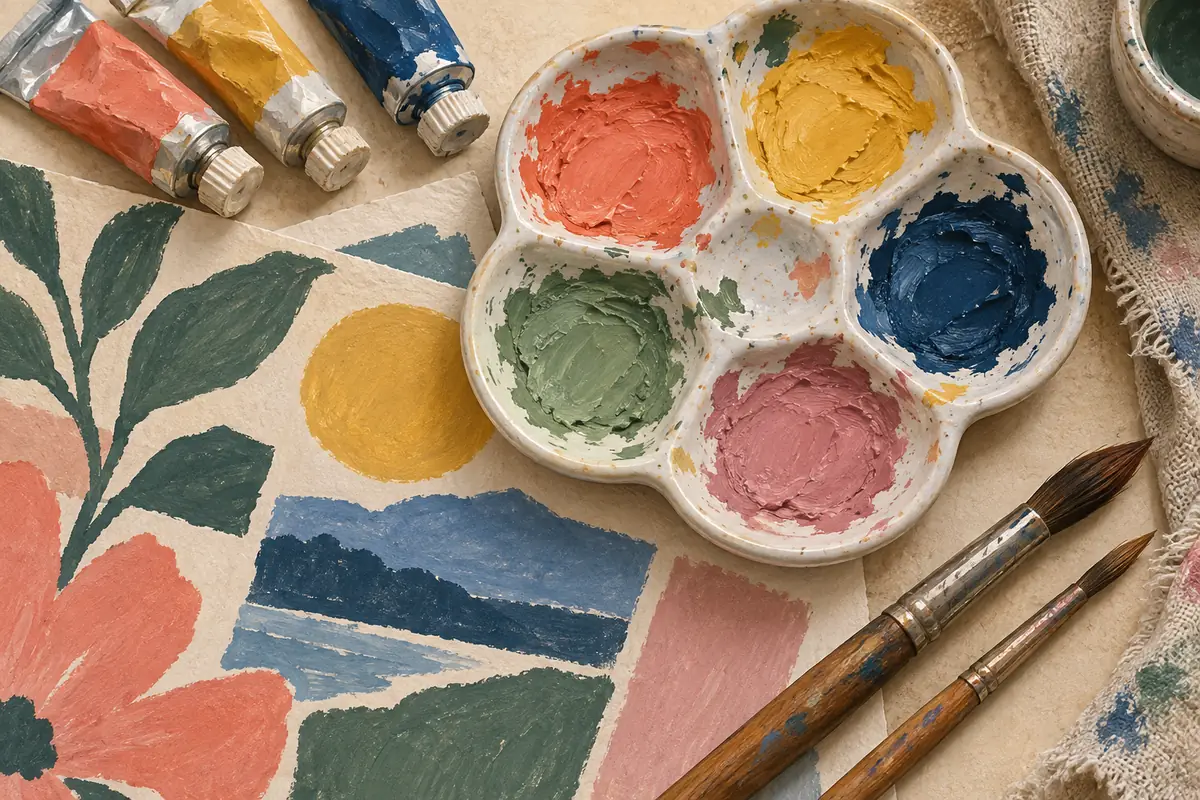
Good gouache paint should make you want to fill a page. It should not make you feel that you need forty tubes before you can start.
I would buy a small range with a clear purpose. Some painters want to soften a dry edge with water. Others want a new layer to leave the old one alone. That choice matters more than the number of colors in the box.
My five picks cover both needs. Four are traditional gouache; one is acrylic gouache. All suit a different way of working, so I would choose the paint before choosing the set size.
The best gouache paint for your way of working
| Gouache paint | My reason to choose it |
|---|---|
| Winsor & Newton Designers Gouache | A small primary set for learning to mix |
| Holbein Artists' Gouache | A broad traditional range for flat color |
| Daniel Smith Extra Fine Gouache | Detailed pigment information for a chosen palette |
| M. Graham Gouache | Honey-based paint for a palette you revisit |
| Holbein Acrylic Gouache | Matte layers that resist water once dry |
1. Winsor & Newton Designers Gouache: my first set
The Designers Gouache Primary Colour Set is my pick for a fresh start. It has six 14 ml tubes: red, yellow, blue, green, black and zinc white. That is enough to explore color mixing without a long hunt through a box.
I like a small set because it makes each mix easier to follow. If a green turns dull, you can see which blue and yellow went into it. A huge range can hide that lesson behind another ready-made shade.
This is traditional gouache paint. You can work toward flat, opaque shapes or thin it for lighter marks. The matte finish suits sketchbook work, small pictures and designs you plan to scan.
The white is worth a second look. Zinc white is useful for mixing, but it is not the first white I would choose to cover a dark shape. If strong highlights are your main goal, compare a separate titanium white before buying more colors.
Choose it for: a focused start with a known range. Think twice if: you want a large ready-made palette or a paint layer that will not lift when wet.
2. Holbein Artists' Gouache: for a wider traditional palette
Holbein Artists' Gouache is my choice if you enjoy traditional gouache and want more colors to build around. The range suits flat shapes, close edges and work where a matte finish is part of the look.
Holbein describes finely ground pigment without added agents used just to make the paint opaque. That does not mean each color covers in the same way. The pigment still matters. A thin yellow may behave quite differently from a dense earth color.
I would buy a few tubes that fill real gaps in a palette. A warm red, a cool blue or a useful earth shade can help more than a second broad set. Make a chart as each new color arrives. Paint one patch thick and one thin.
Be careful with the name on the tube. Holbein Artists' Gouache and Holbein Acrylic Gouache are different paints. If you want to add water to a dry mix later, choose the traditional line. The acrylic version is the fifth pick here.
Choose it for: a flexible traditional range. Think twice if: you prefer lower layers to stay fixed while you paint over them.
3. Daniel Smith Extra Fine Gouache: for pigment-led choices
Daniel Smith Extra Fine Gouache appeals to me for a different reason: you can build a small palette around the pigments you want. Its published color information helps you compare more than a pretty swatch.
The maker uses gum arabic and a high pigment load to produce opacity without adding white or other fillers to the colored paints. That gives each pigment room to keep its own traits. It does not promise that all gouache colors will feel or cover alike.
I would choose this range if I liked making mixes and reading a paint label. Check the pigment code, opacity and lightfastness for each tube. A good label helps you avoid buying two colors that play almost the same role.
There is a tradeoff. A palette chosen one tube at a time takes more thought than a ready-made box. If you just want to get paint on a page this weekend, the small Winsor & Newton set is the simpler start.
Choose it for: a small, deliberate palette. Think twice if: you want every color to cover exactly the same way.
4. M. Graham Gouache: for paint you return to
M. Graham Gouache uses honey in its formula. The brand explains that honey helps hold moisture and makes paint easier to rewet. I would consider it for a palette that sits beside the sketchbook between short painting sessions.
This is still traditional gouache paint. It can make opaque marks, but natural pigment differences remain. Add water for a thinner wash; use less for more body. A soft mix in the palette does not mean that the finished painting is waterproof.
The same moisture-friendly trait can be less welcome in a warm, damp place. A travel palette needs a trial before it goes into a bag. Check that the paint is firm enough for the way you carry it. Keep lids and edges clean.
I would choose tubes for a home palette first. Try one or two shades you use often, then decide whether the feel suits you. The maker's paint-care answers explain the role of honey and storage in more detail.
Choose it for: paint you want to rewet between sessions. Think twice if: you need a dry, tidy palette for travel in humid weather.
5. Holbein Acrylic Gouache: for layers that stay put
Holbein Acrylic Gouache is my pick when you want a matte look and a lower layer that resists water once dry. It is an acrylic paint with a gouache-like finish. Older listings may use the name Holbein Acryla Gouache.
Unlike traditional gouache, acrylic gouache will not turn back into usable paint when you add water to a dry blob. That is both its strength and its limit. You can build crisp shapes over a dry base, but you cannot save every mix by wetting it later.
I would use it for graphic shapes, painted lettering and mixed-media work where layers need to stay separate. Squeeze out modest amounts. Wash brushes before paint sets in the hairs, and keep a wet rag nearby for small spills.
Do not buy acrylic gouache by mistake if a class calls for water-soluble gouache. The names look close on a shelf. The way they behave on day two is not close at all.
Choose it for: clean layers and a matte finish. Think twice if: you want to lift dry edges or rewet leftover paint.
Traditional gouache or acrylic paint: choose the dry state
Gouache is often called opaque watercolor. Traditional gouache and watercolor paint can use the same binder, such as gum arabic, but gouache is made for more solid coverage. A gum arabic binder helps hold pigment to the page while allowing the paint to respond to water.
Acrylic gouache uses an acrylic binder. It starts as a water-based paint, then sets into a water-resistant film. The words "water-based" do not mean "rewettable forever."
| Paint type | What that means for you |
|---|---|
| Traditional gouache | Water can lift a dry layer, which helps edits but can muddy new strokes |
| Acrylic gouache | A dry layer resists water, which helps layering but stops you reusing dried paint |
I would choose traditional gouache to learn water control and color mixing. I would choose acrylic gouache if fixed layers were central to the picture. Neither paint is a better artist. They leave different doors open.
Buy fewer gouache colors and better paper
A large set of student-grade gouache can be fun. It can also leave you unsure whether a weak patch came from the paint, the water or the paper. I would rather learn those things with a few dependable colors.
Student-grade paint and professional-grade gouache vary in pigment choice, strength and price. The label alone is not a promise. Look at the range's color details and the cost of the tubes you will replace most often.
In a discussion about a first gouache kit, painters disagree about cheap sets but return to one useful idea: a small palette and enough white. Some enjoyed a low-cost start; others found weaker paint hard to learn with.
My starting kit would be red, yellow, blue and white, plus one earth color if the budget allows. Add black if it suits your work. You do not need to replace all your art supplies at once.
Save room for watercolor paper that can take wet paint. A smooth, hot-pressed paper helps fine edges. A more textured sheet can suit loose marks. For a first pad, 140 lb watercolor paper is a useful weight to consider. Smooth paper suits fine details; a toothier surface shows more of a dry brush stroke. Use a scrap from the same pad to judge coverage before you blame the paint.
Student grade gouache or artist grade?
Good quality gouache often has a higher pigment load. That can mean better coverage with less paint, though not all gouache pigments are equally opaque. A high price alone does not prove that one tube will suit your work.
Student grade gouache can use less pigment or lower-cost ingredients to keep the price down. It can still be a useful medium for practice. I would compare one color you use a lot before replacing a whole set. Artist grade paint earns its cost when its strength, handling or lightfastness solves a problem you can see.
How much water should gouache paint need?
Start with a damp brush and a small dab of paint. Mix on a palette until the brush moves without dragging. If the color runs like tea, you have made a wash. If it leaves thick ridges, add a little water.
There is no one perfect recipe. Fresh paint, dried gouache and different pigments need different amounts. Make two small patches beside each other. Add one brushful of water to the second mix and watch what changes.
To mix gouache, use enough paint for the whole shape. Matching a half-used mix can be harder once it dries. Keep a small note of the colors you used if the same shade will return elsewhere in the picture.
Watercolor paint can look bright because light passes through it and bounces off white paper. Gouache paint often relies more on an opaque layer. If you keep thinning it, expect the look to change. That is a choice, not always a mistake.
Keep the matte finish smooth
A velvety matte finish looks simple, but too much paint can make the page feel heavy. Use thinner layers for broad areas. Let each one dry before judging the next move.
With traditional gouache, a wet brush may wake up the color below. For clean marks, use less water and fewer passes. For soft edges, that same lift can help. Let the effect guide the stroke.
If paper fibers start to rise, stop rubbing. Let the area dry. More work on a weak wet patch can turn a small flaw into a rough hole. Good paper buys you some margin, not endless scrubbing.
Gouache dries to a matte finish, and some colors shift in value as they dry. Make a dry swatch before matching a large background. Your wet palette is not the final judge.
Use a wash, a flat shape or a dry brush
Gouache paint can give you more than one kind of mark. Thin it toward a transparent wash for a first layer. Use a creamy consistency for an opaque finish. For texture, wipe most of the wet paint from the brush, then skim the surface.
A wash can help you place the light and dark areas before you paint fine details. A dry brush can suggest bark, grass or a rough wall. These effects work well in small illustrations where one clear mark can stand for a lot.
For multiple layers, let the first coat dry and use a light touch. Scrubbing can lift previous colors into the new mix. Acrylics give you more fixed layers; regular gouache gives you more chance to soften them. Choose the medium for that difference, not just the look of a fresh swatch.
A small set of art supplies is enough
I would start with two synthetic brushes: a round for shapes and a flat for wider areas. Add a water jar, rag and white mixing surface. A ceramic palette is easy to clean; palette paper can be handy when cleanup time is short.
Keep art tools separate from food tools. Follow each tube's label, especially when a pigment has a warning. A paint made for fine art is not a cosmetic or a food decoration.
If you make cards, my paper cutter picks can help you trim blank sheets before painting. A clean border is easier to plan than to rescue after the page is full.
For small opaque dots or lines, POSCA markers may suit your grip better than a brush. I would still keep gouache for the large areas where mixing a shade is part of the fun.
Will a finished painting keep its color?
Check lightfastness by color, not just by brand. This rating describes how well a pigment resists fading in light. Brightness in a fresh swatch is not the same thing.
The Daniel Smith gouache swatch guide lists color-specific details that help with this choice. Other makers publish charts too. Read the chart for the exact paint line you buy.
Keep finished work out of strong direct sun. Protect a traditional gouache surface from water and rubbing. For work you plan to sell, learn how the chosen paints and framing suit that purpose before making claims about how long they will last.
My best gouache choice for a first painting
I would start with Winsor & Newton Designers Gouache, a small palette and a decent pad. Learn what one red, one blue and one yellow can do. Then buy the next color because a painting needs it.
Choose Holbein Acrylic Gouache instead if you want dry layers to stay put. That is the one change I would settle before opening a tube. The rest of the kit can grow with the work.